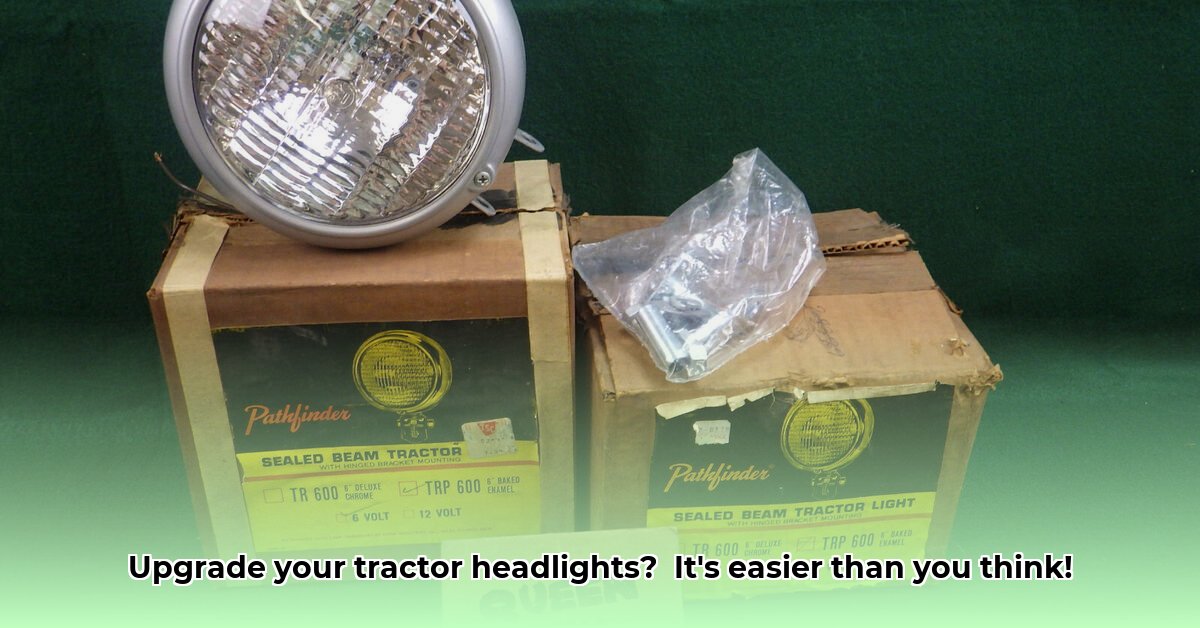
Assessing Your Tractor's Lighting System
Restoring your classic tractor's headlights can seem daunting, especially with the intricacies of a 6-volt system. But with a methodical approach and the right information, you can achieve brilliant, reliable illumination. Before starting, carefully inspect your existing headlight setup. Are the lenses cracked or yellowed? Examine the wiring harness for brittleness, fraying, or corrosion—these are critical safety concerns. Finally, assess the voltage regulator; a faulty regulator can significantly impact your headlight performance. A well-maintained voltage regulator ensures consistent voltage to your lights, preventing damage and dimming. Document your findings, taking photos to aid in later repairs or upgrades. This thorough assessment informs your repair or upgrade strategy. For additional maintenance, you may find this guide on tire replacement helpful.
Sourcing Replacement Parts
Finding original 6-volt parts can be difficult. Many reputable suppliers specialize in classic tractor parts, offering reproduction components. Online marketplaces provide additional options, but buyer beware! Read reviews carefully and compare prices from multiple sources before purchasing. Consider the quality variations when choosing between original and reproduction parts. Investing in higher-quality components ensures reliability and longevity.
Repairing or Replacing Existing Headlights
This section details the repair or replacement of your tractor's existing 6-volt headlights. Remember safety first! Always disconnect the battery's negative terminal before commencing any electrical work.
Step 1: Disconnecting the Battery (Critical): Disconnect the negative battery terminal. This prevents electrical shocks.
Step 2: Accessing the Headlight Assembly: Consult your tractor's manual for specific instructions. Generally, this involves removing screws or bolts securing the headlight assembly.
Step 3: Inspecting the Bulb: Carefully remove the bulb. Is the filament broken? A simple bulb replacement may suffice using a 6-volt bulb with the correct wattage. Consult your owner’s manual for correct bulb specifications.
Step 4: Replacing the Bulb (If Necessary): If the filament is broken, gently install a new 6-volt bulb, ensuring it's correctly seated.
Step 5: Reassembling and Testing: Reassemble everything, ensuring all screws and fasteners are securely tightened. Reconnect the battery and test the headlights.
Upgrading to LED Headlights
LED conversion offers significant advantages: increased brightness, longer lifespan, and improved energy efficiency. However, choosing the right LED kit is crucial. Use only kits designed for 6-volt systems, ensuring compatibility with your headlight housings and preventing damage to your tractor's electrical system. A compatible LED kit avoids potential issues with voltage regulation or short circuits.
Step-by-Step LED Installation:
- Select a Compatible Kit: Choose a kit designed for 6-volt systems and your specific headlight type.
- Battery Disconnection (Critical): Disconnect the negative battery terminal.
- Headlight Removal: Carefully remove the existing headlights (refer to the previous section).
- LED Installation: Follow the kit's instructions; this usually involves connecting the LEDs to your existing wiring harness. Double check polarity!
- Connection Verification: Inspect all connections for tightness and proper insulation. Loose connections can cause overheating, potentially leading to a fire.
- Testing and Verification: Reconnect the battery and thoroughly test your new LED headlights.
Testing and Troubleshooting
After completing your repairs or upgrade, thoroughly test your headlights to ensure proper functionality. Check for issues like loose connections, faulty bulbs, or problems with the voltage regulator. If you encounter difficulties, don't hesitate to consult a qualified mechanic or seek assistance from online tractor forums. Reliable headlights are essential for safe operation.
Key Takeaways: Upgrading your tractor's lighting system improves visibility and safety. Selecting the correct parts and following safety procedures is vital. Careful planning and execution ensure a successful upgrade.